Feeding the Afternoon: A UK Manager's Guide to Conference Catering as Programme Design
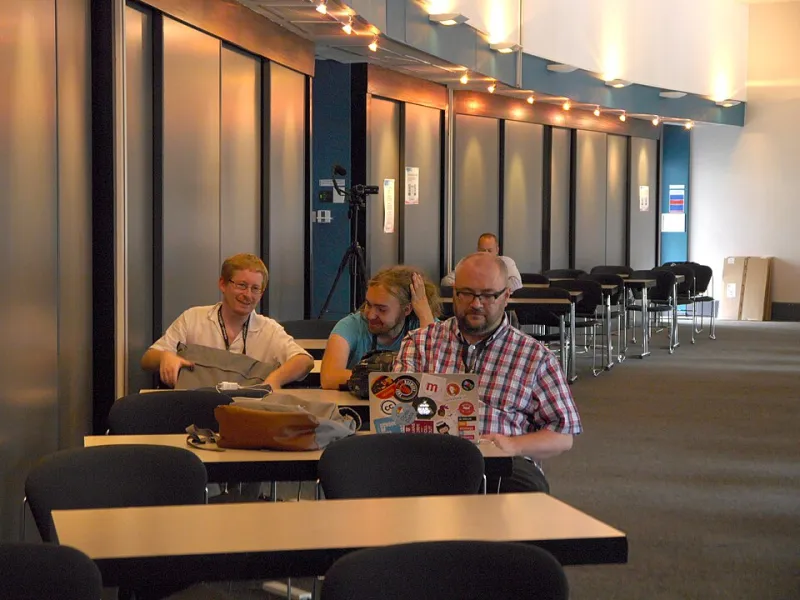
Photo: Chris McKenna, CC BY-SA 4.0, via Wikimedia Commons
Ask a room of UK managers to name the least productive hour of a conference day and most will point to the same stretch: somewhere between 2.30pm and 4pm. The usual explanation is a heavy lunch, a long morning or simple fatigue. The more useful explanation is that the event has been designed to produce that dip. Catering is treated as a break from the programme rather than part of it, and the afternoon is then asked to carry complex material on a blood-sugar curve that was set hours earlier.
For managers who book conference time, and for organisers who shape the day, this is not a minor hospitality question. It is a question of whether the investment in speakers, travel and delegate attention survives the afternoon. In 2026, with venues under pressure to justify package costs and delegates more selective about which events they attend, catering deserves the same scrutiny as the agenda.
The programme begins at the buffet
Conference design often treats food as punctuation: coffee on arrival, lunch at one, tea at three. That framing is convenient for venues but weak for learning. A delegate's capacity to engage in a 3pm session is influenced by what was served at 12.30, how much coffee was available at 2pm and whether the room was given a reason to move. The menu is not separate from the programme; it is one of the programme's levers.
This matters particularly for managerial audiences. A conference day for UK managers is rarely a passive listening exercise. It involves judgement, note-taking, networking and the quiet work of deciding what to take back to a team. Those activities are vulnerable to the wrong kind of lunch and the wrong rhythm of refreshment.
Caffeine is a scheduling instrument
Coffee is usually provided generously and without a plan. The result is a morning of steady top-ups, a post-lunch espresso and a mid-afternoon crash that everyone attributes to the topic. A more deliberate approach treats caffeine as a timing instrument rather than a continuous supply.
In practice, that means ensuring water is as visible as coffee, offering decaffeinated options without making them feel like an apology, and avoiding a heavy caffeine push immediately before a long plenary. A short break with water and fresh air will often do more for attention than a third flat white. For organisers, the question to ask the venue is not simply 'how many coffee points?' but 'when are they served, and what else is available?'
Lunch is an architectural decision
A buffet that is heavy on carbohydrates, pastry and creamy sauces is a predictable way to lose the first hour after lunch. This is not a call for austerity. It is a call for fit. A lighter, protein-led lunch with generous vegetables, clear labelling and smaller plates tends to support afternoon concentration better than a generous hot buffet that leaves delegates calculating how soon they can leave.
Timing matters as much as content. A lunch that runs from 12.30 to 2pm with no clear signal to return will erode the afternoon before it starts. A tighter lunch window, with coffee served away from the lunch room and a clear start time for the next session, gives the afternoon a chance. For managers booking events, these details should be written into the contract or the venue brief, not left to the day.
Dietary inclusion is a competence issue
UK conference audiences are diverse, and dietary requirements are not an optional extra to be solved on the morning. Vegan, vegetarian, halal, kosher, gluten-free and allergy-sensitive needs should be planned for in advance, labelled clearly and served without requiring delegates to negotiate with catering staff in a queue.
This is partly a matter of professional courtesy and partly a matter of event quality. A delegate who cannot eat confidently is a delegate who is distracted, excluded or quietly resentful. Managers booking on behalf of a team should ask for a dietary matrix in advance, confirm how dishes are labelled and check whether separate serving utensils are provided. These are unglamorous questions, but they are the kind of due diligence that distinguishes a well-run event from a merely well-catered one.
The afternoon needs a different format
Even good food cannot rescue a poorly designed afternoon. The 3pm slump is often a format slump: a ninety-minute plenary, a panel of five with no chair, a room with no movement and a topic that needed a workshop rather than a lecture. The remedy is structural. Shorter segments, clear chairing, breakout discussions, a change of room or a walk-and-talk session can do more for attention than another round of biscuits.
For UK managers designing internal conferences or external events, the principle is simple: do not ask the afternoon to do the work of the morning in the same format. If the content is complex, give delegates a way to process it. If the content is strategic, give them a way to challenge it. If the content is technical, give them a way to apply it. Refreshment supports that work; it cannot replace it.
An audit in six questions
Before signing off a conference package in 2026, managers and organisers should be able to answer six questions:
- When is coffee served, and is water available throughout the day?
- What is the composition and timing of lunch, and how quickly can delegates return to session?
- How are dietary requirements collected, labelled and served?
- Is there a planned change of pace or movement in the 2pm to 4pm window?
- Are afternoon sessions designed in shorter blocks with clear chairing?
- Does the venue brief treat catering as part of the programme or as a separate line item?
The answers will not guarantee a good conference, but weak answers almost guarantee a difficult afternoon. The 3pm slump is not an inevitable feature of UK conference life. It is a design choice, and it can be designed out.
MCon UK's view is that managerial endurance is not a matter of willpower. It is a matter of programme design, and catering sits squarely within it. Managers who treat the menu as part of the agenda will get more from the day, and organisers who do the same will get more from their delegates.