Before the Badge Goes On: A Manager's Due Diligence on Conference Conduct

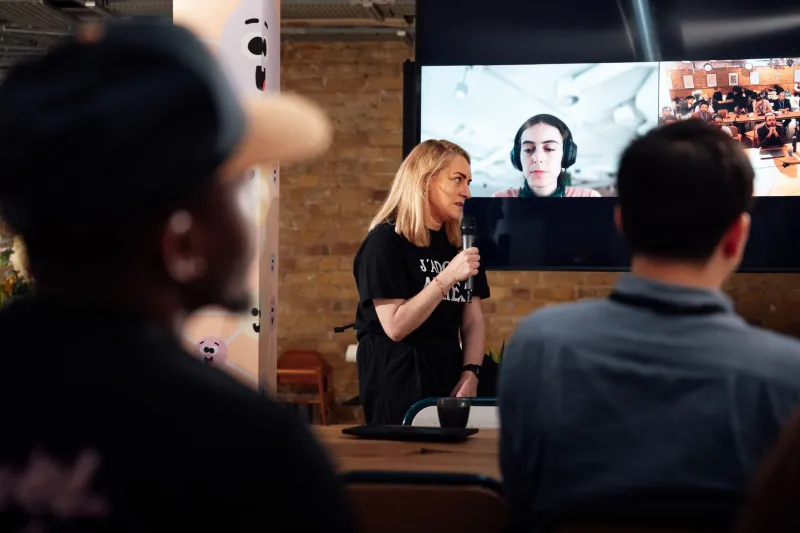
Photo: conference steward briefing delegates registration desk UK event, via assets.hyatt.com
A conference code of conduct is often treated as a registration formality: a link in the joining instructions, a checkbox, a paragraph on the website. By the time delegates arrive, the document has done its administrative work and disappears. The difficulty is that conduct issues do not observe the same timetable. They arise in queues, at drinks receptions, in breakout rooms and on the conference app. A policy that exists only at the point of booking is not a safeguard. It is a record that someone once thought about the matter.
For UK managers, the question is not whether an event has a code. Most credible conferences now do. The question is whether the code is operational: whether delegates know where to take a concern, whether chairs and stewards have been briefed, and whether the organiser can describe what happens after a report is made. That is a procurement question as much as an ethical one.
The document is the beginning, not the control
A written policy sets expectations. It does not, by itself, change behaviour. Organisers who treat publication as the end of the process tend to discover the gap under pressure: a delegate reports inappropriate comments to a steward who has no script; a chair is asked to mediate a dispute without knowing the escalation route; a concern raised by email goes unanswered because the inbox is monitored by a temporary member of staff.
The practical alternative is to treat conduct as part of event operations, alongside fire evacuation, accessibility and catering. That means a named owner, a briefing schedule, a reporting log and a review after the event. It also means recognising that the policy applies to the social programme, the exhibition floor and digital channels, not only the formal sessions.
Four questions before a team booking
Managers who send staff to conferences are not passive customers. They are responsible for the conditions in which their teams work, even when the workplace is temporarily a hotel or exhibition centre. Before approving a place in 2026, it is reasonable to ask the organiser four questions.
First, where is the code published and how is it brought to delegates' attention? A link buried in a confirmation email is not the same as a summary in the opening address and a copy in the delegate pack.
Second, what are the reporting routes? A single generic email address is better than nothing, but it is not a complete answer. Delegates should have at least two ways to raise a concern, including one that does not require them to approach a senior figure in public.
Third, who receives reports and what training have they had? Chairs, stewards and registration staff are often the first people to encounter a problem. They need to know what to say, what not to promise and how to escalate.
Fourth, what does the organiser do after a report? Acknowledgement, confidentiality, interim measures and a timeline matter more than a statement of values. Managers do not need to see personal case files, but they can ask for the process.
These questions are not adversarial. Good organisers welcome them. They are also a useful signal to delegates that the employer takes the event seriously.
Briefing the room
Chairs and stewards carry much of the practical burden. A chair may need to intervene in a panel discussion that has become personal, or to manage a question from the floor that crosses a line. A steward may be approached during a break by a delegate who is distressed. Neither role requires legal expertise, but both require a clear script and a known route for escalation.
Organisers should brief these roles before the doors open. The briefing need not be lengthy. It should cover the standard of behaviour expected, the reporting options available, the difference between listening and investigating, and the importance of not promising outcomes. It should also cover the social programme, where alcohol and informal settings can alter the dynamics.
Managers attending with a team can reinforce the same message. A short pre-event conversation is more effective than a policy email forwarded at the last minute. It should cover expectations, the named contact for concerns, the boundaries around photography and social media, and the fact that the code applies after hours as well as in the auditorium.
Reporting routes that people can use
A reporting route is only useful if a delegate can find it at the moment it is needed. That means visible information at registration, in the conference app and in the materials given to chairs and stewards. It also means a route that works for people who do not want to identify themselves publicly, while being honest about the limits of anonymity.
Organisers should publish an anticipated response time and keep to it. A report that receives no acknowledgement for several days undermines confidence in the entire policy. A simple log can record the date, the category of concern and the action taken, without retaining unnecessary personal detail.
For managers, the relevant check is whether the employer's own reporting channels are clear. A delegate may prefer to speak to a line manager rather than an event steward. That route should be known and should not depend on the manager being present at the conference.
Close the loop
After the event, the policy should be reviewed against what actually happened. Organisers can ask chairs and stewards for feedback, check response times and update the briefing. Managers can ask for aggregate information about how concerns were handled, not personal disclosures, and use it to inform future bookings.
The test of a conference conduct policy is not how it reads on a website. It is whether a delegate knows where to go, whether the person they approach knows what to do, and whether the organiser can show that the process worked. For MCon UK readers, that is the standard worth applying before the badge goes on.