Two Audiences, One Agenda: The Hidden Overheads of Hybrid UK Conferences
Hybrid conferences have become a standard feature of the UK professional calendar. The proposition is familiar: a room in Manchester or London, a stream for those who cannot travel, and a promise that geography need no longer determine who can take part. That promise is real, but it is incomplete. For managers deciding how to spend scarce time, and for organisers designing the day, hybrid attendance carries a set of overheads that are rarely priced into the programme. Call it the hybrid tax: the additional attention, influence and follow-up work demanded when one event serves two audiences at once.
The tax is not an argument against hybrid formats. It is an argument for accounting for them properly. In 2026, with travel budgets under scrutiny and professional development time tighter than ever, managers need a clearer view of what each mode of attendance actually delivers. Organisers, meanwhile, need to move beyond counting remote registrations as evidence of inclusion.
The attention ledger
In a single-room conference, attention is relatively easy to locate. The chair scans the room, the speaker reads the mood, and questions arrive through one queue. A hybrid session splits that attention in ways that are often invisible on the agenda.
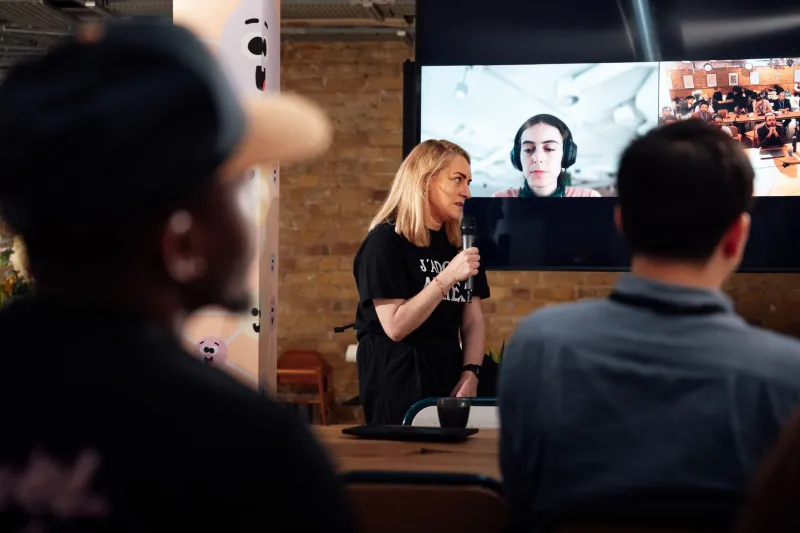
The chair must watch the floor and the chat pane. Remote questions may be typed early, then buried beneath greetings and technical queries. In-room questions carry the advantage of a raised hand and a visible face. Speakers, asked to address both audiences, tend to favour the room in front of them. Remote attendees report a familiar experience: watching a conversation rather than joining one.
There is a corresponding tax on those in the room. A session designed for dual audiences often pauses for audio checks, repeats questions for the stream, and spends time managing the technology rather than the argument. None of this is fatal, but it accumulates. A manager attending four sessions in a day may lose the equivalent of a working hour to hybrid housekeeping.
Influence is not evenly distributed
Conferences are not only learning events. They are places where managers test ideas, raise concerns and build a professional profile. Hybrid design can quietly distribute that influence unevenly.
A remote delegate who submits a question may find it paraphrased or dropped when time runs short. A panel that includes one remote speaker may find that the conversation flows between those physically present, leaving the remote voice to interject at the edges. Voting tools and polls can help, but only if they are designed before the day rather than added as a gesture.
For managers, the practical question is straightforward: what do you want from the session? If the answer is to listen and gather information, remote attendance may be efficient. If the answer is to be seen, to intervene in a debate or to meet a particular speaker, the case for being in the room is stronger. Hybrid access is not the same as hybrid influence.
The networking gap
The informal value of a conference sits in the gaps: the coffee queue, the walk between rooms, the brief exchange after a panel. These are difficult to replicate online, and organisers should stop pretending otherwise. Remote breakout rooms can work well when they have a clear purpose and a skilled host, but they rarely produce the accidental encounters that lead to useful professional relationships.
There is also an asymmetry in follow-up. Those in the room leave with a handful of business cards, a sense of who said what, and perhaps an invitation to continue a conversation. Remote attendees leave with a recording link and good intentions. The result is that the hybrid tax often appears after the event, when the remote delegate must work harder to convert a session into a relationship.
The follow-up tax
Recordings are a genuine benefit of hybrid formats, but they create their own obligations. A manager who attends remotely may be tempted to treat the recording as a substitute for notes. In practice, the recording is only useful if someone indexes it, circulates the key points and identifies the actions. Without that discipline, the hybrid attendee receives more material and less clarity.
Organisers can reduce this tax by publishing a short summary alongside the recording, flagging the questions that were not reached, and making speaker contact routes explicit. Managers can reduce it by treating remote attendance as a scheduled activity with a follow-up slot in the diary, rather than as background listening.
A checklist for managers and organisers
For managers choosing a mode of attendance:
- Match the mode to the objective. Information gathering can often be remote; influence, recruitment and relationship-building usually reward presence.
- Ask whether the session will have a named hybrid chair. If not, expect the question queue to be uneven.
- Submit questions before the day where possible, and ask a colleague in the room to raise them if they are not reached.
- Book a 30-minute follow-up slot after the event to review notes, identify contacts and record any CPD evidence.
- Count the full time cost, including setup, replay and follow-up, not just the published session length.
For organisers designing a dual-audience event:
- Publish a participation policy that explains how remote and in-room questions will be handled.
- Appoint a hybrid chair with the authority to interrupt and balance the conversation.
- Cap the number of sessions that attempt to serve both audiences at once; some sessions are better run twice or reserved for one mode.
- Report attendance and participation metrics separately, so that remote registrations are not treated as equivalent to engaged attendance.
- Provide a written summary and an unanswered-questions log within a week of the event.
Accountability, not availability
The case for hybrid conferences rests on access, and that case remains sound. But access is a starting point, not a measure of value. The managers who get the most from dual-audience events in 2026 will be those who choose their mode deliberately and plan the follow-up. The organisers who earn repeat attendance will be those who treat the remote audience as a second room with its own needs, not as a stream attached to the main event.
Hybrid is now a permanent part of the UK conference landscape. The question is no longer whether to offer it, but whether the design is accountable for the attention it asks for and the influence it claims to distribute.