Beyond the Plenary: Making the Breakout Session the Centre of the UK Conference Day
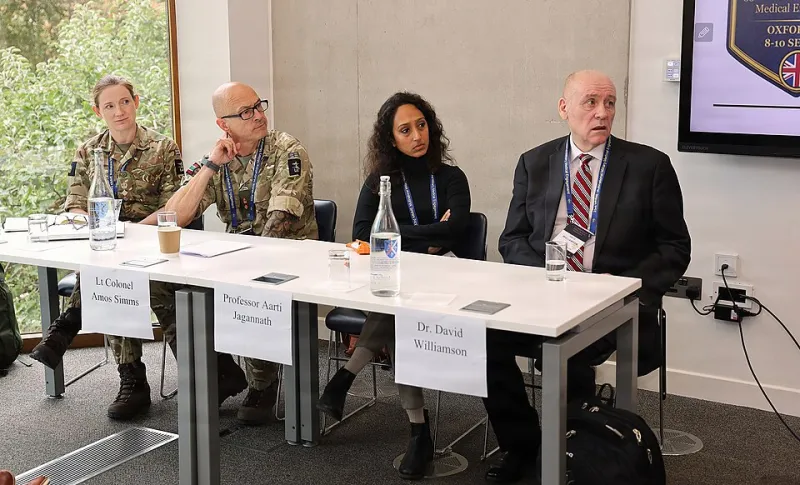
Photo: U.S. Army 68TMC by Sgt. 1st Class Eric Johnson, Public domain, via Wikimedia Commons
The quiet economics of a good small-room session
A conference brochure often reads like a ladder: keynote at the top, panels in the middle, workshops somewhere near the coffee queue. That hierarchy is backwards. For many delegates, especially managers who have paid their own way or fought for a training budget, the small-group session is the reason to travel. It is where a peer admits a project is failing, where a facilitator tests a framework against real constraints, where a contact becomes a conversation. The plenary may set the tone; the breakout room does the work.
Yet organisers continue to treat breakouts as scheduling filler. Rooms are allocated late, facilitators are chosen for seniority rather than skill, and follow-up is left to chance. The result is a familiar disappointment: a session that could have been a turning point becomes a report-back with biscuits. In a crowded UK conference market, that is not just a missed opportunity. It is a product defect.
Room size is a design decision, not a booking outcome
The first mistake is physical. A workshop for 60 people in a theatre-style room is not a workshop; it is a lecture with group work bolted on. Small-group formats need small-group conditions: cabaret seating, sightlines that allow eye contact, tables that can be rearranged, and enough space for a facilitator to move without sidestepping handbags. Organisers should specify the format before they book the room, not after.
There is also a numbers question. Roundtables work best at eight to twelve; workshops at fifteen to twenty-five; anything above thirty needs a different design and probably a co-facilitator. If the programme says 'interactive', the room should make interaction the path of least resistance.
Facilitators need a brief, not just a badge
A common assumption is that anyone senior can run a breakout. Seniority helps with credibility; it does not guarantee facilitation. Good facilitators do three things: they hold the purpose, they manage the room, and they make space for the quiet voices. That requires a brief, a rehearsal and a clear licence to cut off a monologue.
UK conference organisers should treat facilitation as a craft. Give facilitators a one-page design brief: the question the session must answer, the evidence delegates should leave with, the format, the timings and the escalation route if the conversation becomes a complaint session. Pair less experienced facilitators with someone who has run the format before. Pay them, or at least recognise the work in the programme. A badge and a thank-you is not a professional development offer.
Follow-up is where the value compounds
The breakout room creates value; the follow-up preserves it. Too many sessions end with a flipchart photo and a promise to share the notes. A better model is simple: a short summary within 48 hours, a named owner for each action, and a route for participants to continue the conversation. That might be a closed channel, a follow-up call or a standing invite to a regional meet-up. The point is not to build a community for its own sake; it is to make the session's output usable.
At MCon, we have seen this pattern across the UK circuit: delegates remember the sessions where they left with a next step, not just a notebook full of frameworks. Organisers who design for follow-up are not adding admin. They are protecting the return on the whole event.
A manager's checklist for choosing sessions
For managers deciding where to spend their time, the programme is not enough. Read the format, the room and the facilitator before you commit.
- Is the session designed for the number of people in the room? A 50-person 'workshop' is a warning sign.
- Is there a clear question or problem to work on, or just a topic?
- Does the facilitator have a brief beyond a biography?
- Will you be expected to contribute, or can you hide? Choose the former.
- Is there a follow-up mechanism, or will the energy evaporate at the door?
- Does the session connect to a decision you actually need to make in the next quarter?
If the answer is no to most of these, the keynote may be the better use of your time. That is not a criticism of keynotes; it is a question of fit.
Where organisers go next
The UK conference circuit does not need more stages. It needs better rooms, better briefs and better endings. Breakouts are not the side agenda. They are where delegates test ideas against their own organisations, build the relationships that outlast the event, and leave with something they can use on Monday. Organisers who recognise that will design differently. Managers who recognise it will choose differently. The breakout room is not a break from the conference. It is the conference.